


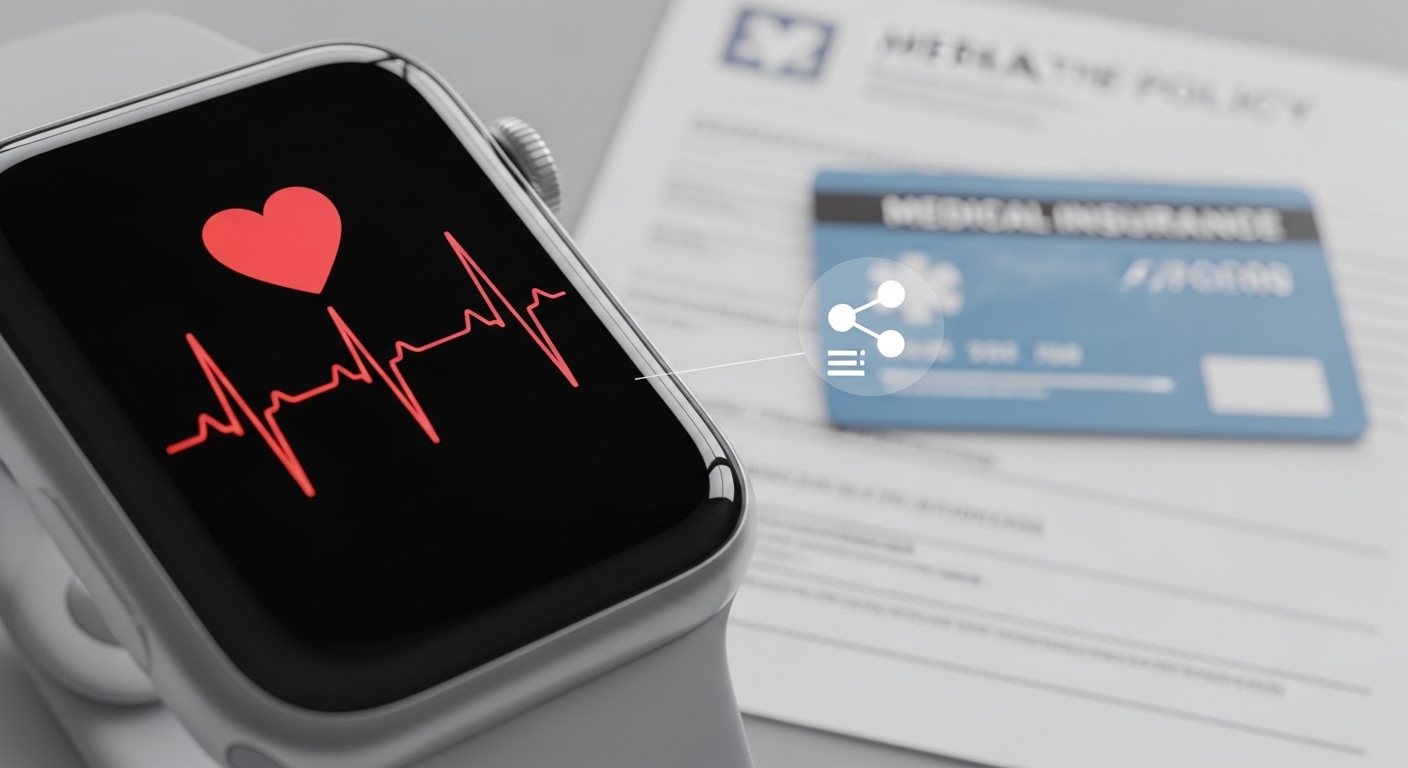
The boundary between our bodies and our technology is effectively dissolving. In 2026, the Apple Watch Series 11 and the Ultra 3 are no longer just notification hubs; they are clinical-grade medical monitors strapped to our wrists. For the insurance industry, this data is the “Holy Grail.”
We are moving away from the era of “static” life insurance—where you take one medical exam every ten years—to “Dynamic Underwriting.” Today, your heart rate, your sleep cycles, and even your blood oxygen levels can directly dictate how much you pay for protection. But the big question remains: Is trading your most intimate biological data for a 15% discount a smart financial move, or a privacy nightmare?
- 1. The Rise of "Pay-As-You-Live" Insurance
- 2. The Financial Upside: Can You Really Save 15%?
- 3. The Privacy Paradox: Who Truly Owns Your Heartbeat?
- 4. The Risk of "Digital Redlining"
- 5. Technical Challenges: Accuracy and "Spoofing"
- 6. How to Safely Opt-In (The 2026 Checklist)
- Verdict: The Biohacking Future is Here
1. The Rise of “Pay-As-You-Live” Insurance
In 2026, major insurers like John Hancock (with their Vitality program) and Aetna have fundamentally changed their business models. They no longer want to be “passive” payers; they want to be “active” health coaches.
Through these programs, you can essentially “earn” your Apple Watch. By paying a small initial fee (often just $25), the rest of the watch’s cost is divided into monthly installments. If you meet your monthly activity goals—measured by your heart rate and movement—the insurance company pays the installment for you. If you hit your targets for two years, the watch is 100% free.
Beyond Steps: The New Metrics of 2026
In 2026, insurers have stopped caring about the “10,000 steps” myth. Instead, their algorithms focus on:
-
Heart Rate Variability (HRV): A key indicator of your nervous system’s resilience. High HRV is linked to longevity and low stress.
-
VO2 Max: Your “cardio fitness” level. This is now considered one of the strongest predictors of all-cause mortality.
-
Sleep Architecture: Insurers now track if you are getting enough Deep and REM sleep, as chronic sleep deprivation is a leading indicator of future heart disease and Alzheimer’s.
2. The Financial Upside: Can You Really Save 15%?
The short answer is yes. For a healthy 35-year-old on a 20-year term life policy, sharing wearable data can lead to:
-
Direct Premium Discounts: Many “Interactive Policies” offer an immediate 5% to 10% discount just for opting in.
-
Reward Points: Earning points for every workout that can be redeemed for Amazon gift cards, hotel stays, or even discounts on healthy groceries.
-
The “Healthy Handshake”: By proving you are active, you can often “skip” the traditional medical exam (no needles, no blood draw), which speeds up the policy approval process from weeks to minutes.
3. The Privacy Paradox: Who Truly Owns Your Heartbeat?
This is the “Xataka” side of the debate: the technical and ethical cost. When you share your Apple Watch data, you aren’t just sending a number; you are sending a biometric signature.
-
The HIPAA Gap: Most people assume their health data is protected by HIPAA laws. However, in 2026, many consumer-facing wellness apps associated with insurance are not strictly covered by HIPAA in the same way a doctor’s office is. The data is often governed by a “Privacy Policy” that you likely clicked “Accept” on without reading.
-
Secondary Data Use: There is growing concern about “Data Creep.” Could your heart rate data be sold to pharmaceutical companies or used by lenders to determine your “stress risk” for a mortgage? In 2026, the legislative battle over Biometric Ownership is the new frontier of civil rights.
4. The Risk of “Digital Redlining”
A darker side of the wearable revolution is the potential for discrimination. What happens if the data shows you have a high resting heart rate due to a genetic condition you can’t control?
While most programs today are “incentive-only” (meaning they reward you for being good rather than punishing you for being bad), the infrastructure for the opposite is already in place. There is a fear that by 2030, those who refuse to share their data will be placed in a “High-Risk” pool by default, effectively paying a “Privacy Tax.”
5. Technical Challenges: Accuracy and “Spoofing”
Can you “cheat” the system? In the early days, people would put their watches on a ceiling fan to rack up steps. In 2026, AI-driven gait analysis makes this impossible. The Apple Watch’s sensors are now sensitive enough to distinguish between a human walking and a mechanical vibration.
However, accuracy remains a hurdle. Optical heart rate sensors (PPG) can still struggle with certain skin tones or high-intensity interval training (HIIT). If your watch misreads your heart rate during a marathon, you might lose your “Vitality Points” for the month, leading to a higher insurance bill. This “Algorithmic Injustice” is a common headache for tech-savvy policyholders.
6. How to Safely Opt-In (The 2026 Checklist)
If you decide that the savings are worth it, follow these three steps to protect yourself:
-
Check the “Data Deletion” Clause: Ensure the app allows you to delete your historical biometric data if you cancel the policy.
-
Use a “Buffer” App: Instead of sharing your entire Apple Health database, use a middleman app that only shares the specific “Points” earned, not the raw biometric files.
-
Review the “Guaranteed Rate” Clause: Make sure your policy states that your premiums cannot increase based on the data—only decrease.
Verdict: The Biohacking Future is Here
In 2026, sharing your heart rate with an insurer is a high-stakes trade. You are giving up a piece of your digital privacy in exchange for a lower cost of living and a “nudge” toward a healthier life. For the disciplined “biohacker,” it’s the ultimate life-hack. For the privacy-conscious, it’s a line in the sand.
As we continue to build Housedomo.com, remember that the “Smart Home” of the future isn’t just about your thermostat—it’s about the biology living inside it.


