






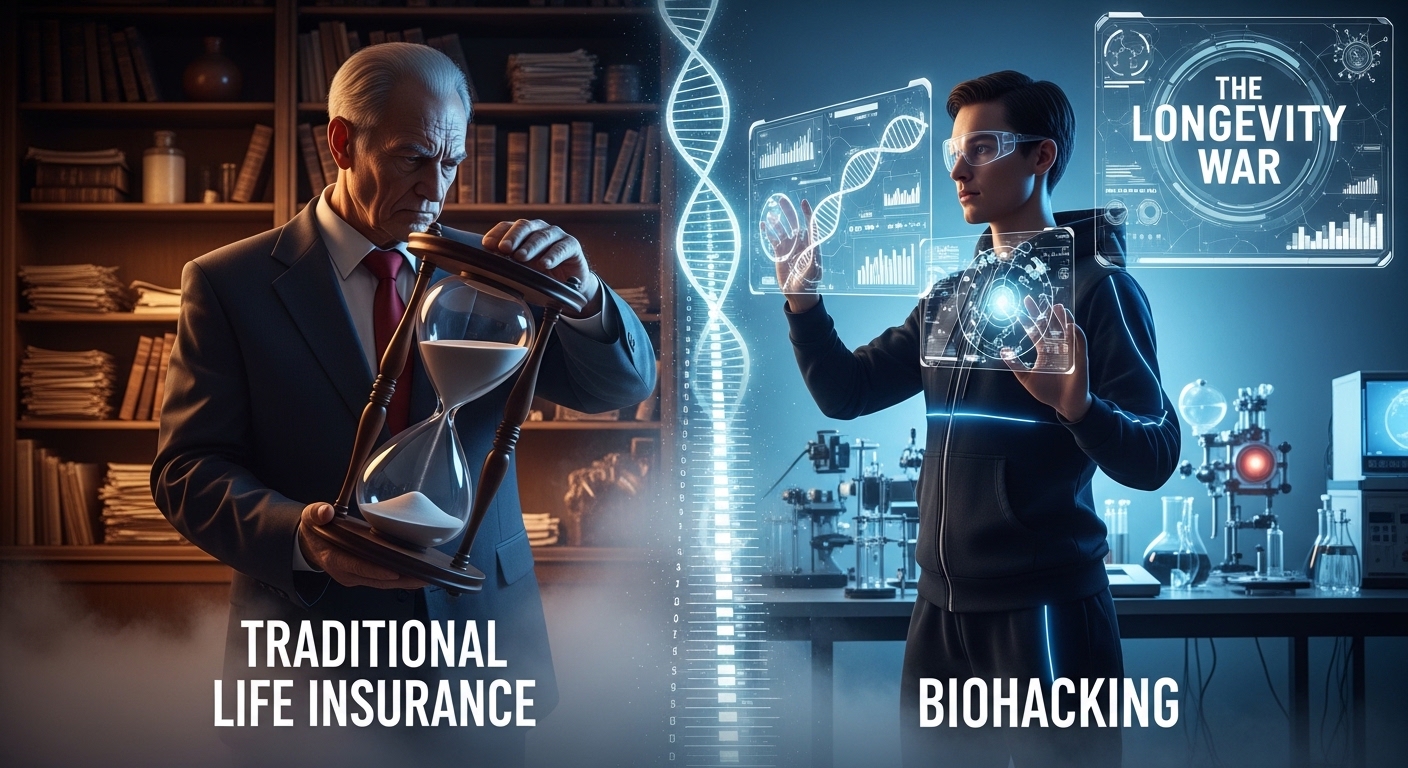
The Longevity War: How Biohacking is Changing Life Insurance Premiums in 2026
The concept of “Forever Young” has officially moved from the pages of science fiction to the actuarial tables of the world’s largest insurance companies. In 2026, being “50 years old” is no longer a fixed data point. Thanks to the explosion of longevity science, a 50-year-old with a optimized biological profile can now secure life insurance rates previously reserved for a 30-year-old.
We are witnessing the “Longevity War”—a multi-billion dollar race where tech-savvy policyholders use “chemical cocktails,” epigenetic reprogramming, and precision nutrition to delay aging, while insurers scramble to rewrite the rules of risk. If you are still paying for a “standard” policy based only on your birth certificate, you are likely overpaying for the “privilege” of aging at a normal rate.
1. Biological vs. Chronological Age: The Rise of Epigenetic Clocks
The biggest technical breakthrough of 2026 in the insurance space is the mainstream adoption of Epigenetic Clocks. For decades, insurers used “Chronological Age” (the number of years since you were born). Today, they care about “Biological Age”—the actual state of your cellular health.
The Horvath and GrimAge Revolution
Using a simple saliva or blood test, insurers can now measure DNA methylation patterns. These “clocks” (like the famous Horvath Clock or the more aggressive GrimAge) act as a cellular calendar.
-
The “Bio-Age” Discount: If you are 45 but your epigenetic clock shows a biological age of 38, companies like Foxo Life and Legal & General are now offering “longevity credits.”
-
The “Accelerated Aging” Penalty: Conversely, if your lifestyle (stress, poor diet, lack of sleep) has aged your cells to a biological 55, you might find yourself flagged for “accelerated risk,” leading to higher premiums even if you look healthy on the outside.
2. The Biohacker’s Toolkit: From Metformin to “Chemical Cocktails”
In 2026, the “average” life insurance applicant is no longer average. A growing segment of the population is actively using pharmaceutical and lifestyle interventions to stall the biological clock.
-
The “Longevity Drugs”: Insurers are seeing a surge in applicants using off-label protocols like Metformin or Rapamycin. While these were once controversial, some 2026 insurance underwriters now view their supervised use as a “positive risk factor,” much like taking a statin for high cholesterol.
-
Cellular Reprogramming: Following Harvard’s 2025 breakthrough in using chemical cocktails to “reset” cellular age in mice, high-net-worth individuals are already entering early-stage human trials for epigenetic “rollbacks.” For an insurer, a client who can “reset” their cellular age is a client who might not trigger a death benefit for another 70 years.
3. DNA Privacy & The 2026 Legal Battlefield
As we gather more genetic data, the legal stakes have never been higher. While the Genetic Information Nondiscrimination Act (GINA) has long protected Americans in health insurance, it famously left a loophole for life insurance.
The New State Protections
By early 2026, a wave of new state laws (led by South Carolina and California) has begun to close this gap.
-
Informed Consent 2.0: Insurers are now strictly prohibited from requiring a full genome sequence as a condition of coverage.
-
Foreign Adversary Protections: 2026 regulations now ban insurance companies from storing biometric or genetic data in jurisdictions considered “foreign adversaries” to protect national genomic security.
-
The “Right to be Forgotten”: If you improve your biological age through lifestyle changes, 2026 laws now mandate that you have the right to a “re-underwriting” event to lower your premium.
4. Dynamic Underwriting: The End of the “One-and-Done” Medical Exam
The traditional medical exam—where a nurse comes to your house, takes your blood, and leaves—is dying. In its place is Continuous Underwriting.
In 2026, the most competitive life insurance rates are “Live Policies.” These policies are linked to your Oura Ring, Whoop strap, or Apple Watch.
-
Real-Time Risk Adjustment: If you maintain a high Heart Rate Variability (HRV) and consistent Zone 2 cardio for six months, your premium drops in real-time.
-
The “Inactivity Tax”: If the data shows you’ve stopped exercising or your sleep quality has plummeted (an early warning sign of many chronic diseases), the policy may lose its “Longevity Credits.”
5. Digital Redlining vs. The Democratization of Longevity
There is a dark side to the Longevity War that we must discuss for Housedomo.com. As insurance becomes more “hyper-personalized” through tech, we risk creating a “Biological Underclass.”
If only those who can afford $500/month in supplements and $2,000 for full-body MRI scans get the “Longevity Discounts,” life insurance becomes a tool that rewards the wealthy for being healthy. In 2026, consumer advocates are pushing for “Universal Bio-Equity,” demanding that insurers provide basic longevity tools (like CGM sensors or basic epigenetic testing) as part of every standard policy.
6. The Verdict: Is “Immortal Insurance” Next?
We are moving from “Life Insurance” (preparing for death) to “Longevity Insurance” (funding an extended life). In 2026, the industry’s goal is to keep you alive and productive as long as possible to keep collecting premiums and avoid payouts.
For the tech-savvy consumer, this is the ultimate “Bio-Hack.” By proving your biological age is younger than your ID says, you aren’t just gaining years—you are gaining financial freedom. The Longevity War has just begun, and your DNA is the most valuable currency you have.


